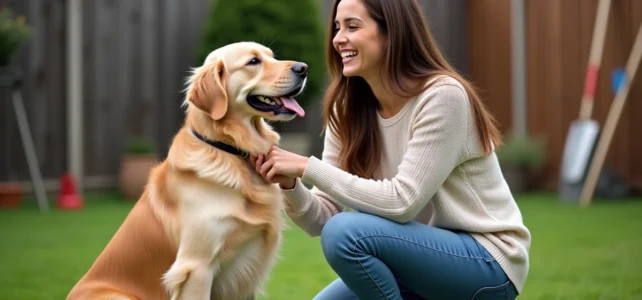
A puppy doesn’t need a hundred commands to learn: it captures the essentials at a glance. Human contradictions sow doubt in its mind, leading to disturbed behaviors that are too quickly labeled as disobedience. It’s not the sterile repetition or automatic treats that shape learning, but the consistency between our actions, the tone of our voice, and the appropriate reward.
Anticipating the dog’s needs, establishing stable rules, and paying attention to its body language: this is the foundation of a solid relationship. Neglecting socialization allows fears to settle in, making the learning of canine rules laborious. When faced with deviations, it’s better to rely on patience than on swift punishment.
Understanding your puppy’s fundamental needs to establish a trusting relationship
The discovery of your puppy begins in the first days at home. At this young age, every novelty shapes its view of the world, as well as its perception of the person sharing its daily life. Observing, testing, adapting: it scrutinizes the reactions of its surroundings. To build a relationship based on trust, one must decode the small signs of discomfort or contentment that your pet expresses without words. Before any training efforts, take the time to understand what contributes to its physical and emotional balance.
Here are the pillars to respect in order to meet its needs:
- Explore: a curious puppy needs varied experiences. Offer it opportunities to smell, touch, hear, discover… while respecting its limits.
- Rest: sleep structures its learning. A tired puppy quickly becomes irritable and less receptive to learning.
- Interact: being around other dogs, humans, and different places helps build confidence and dispel unnecessary fears.
Each breed has its own sensitivities. Daily observation helps adjust training advice and understand your companion’s personality. To truly understand your dog, prioritize direct communication, a gentle tone, and a reassuring routine. Progress comes with kind repetition, never under pressure.
Want to go further? discover Attitude Canine online offers proven resources to enhance your puppy’s training and enrich the relationship over time.
Why consistency and patience are your best allies in daily training
The training of your dog relies on patient construction, not on miracle recipes. Each day, the owner adjusts, repeats, refines. Consistency should guide each of your actions: a command given today must be repeated tomorrow with the same voice, the same expectations. Varying attitude or rules confuses your pet’s behavior, which seeks reliable cues.
Patience is cultivated through trials and their failures. A young dog experiments, makes mistakes, starts over, and progresses in small steps. Getting angry or shouting only leads to misunderstanding and stress. To train your dog, every advancement deserves to be acknowledged. A kind word, a pat, and learning becomes a shared victory.
Here are some principles to follow to establish this dynamic:
- Always be consistent in your training advice; improvisation has no place.
- Your posture matters: remain calm, firm, and attentive.
- Always use the same words for each command, without changing vocabulary based on mood.
The owner then becomes the support point, the stable reference that the dog needs to progress. Maintaining this consistency in actions, words, and attitude allows the animal to learn, thrive, and build a solid and lasting relationship. Investing in this path offers your dog a reassuring framework conducive to its development.
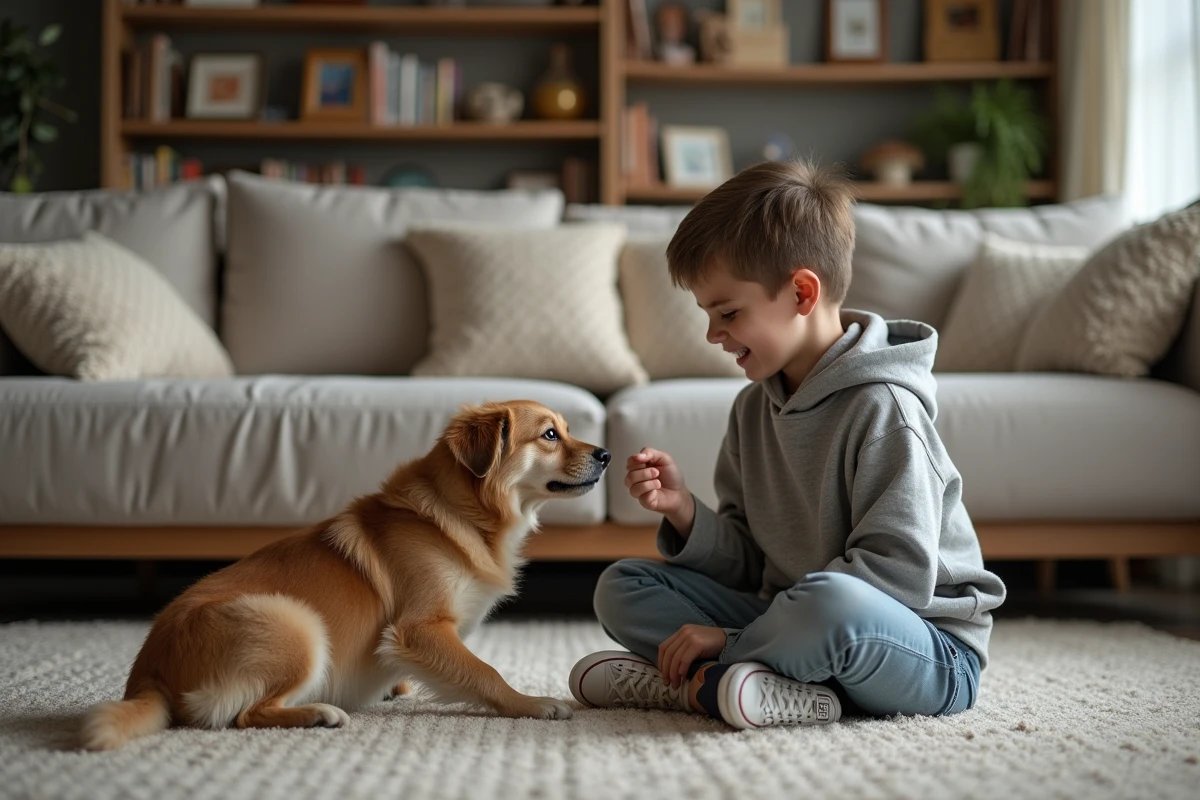
Concrete tips for teaching good behaviors and making life easier together
Teaching the daily rules to your dog is not rocket science: it all relies on simple gestures and commands adapted to reality. Repetition, timing, and valuing progress are the foundations of a thriving training experience. Give the command, wait for the reaction, reward immediately: this trio makes all the difference.
The reward, whether a treat, a pat, or a kind word, turns each exercise into a positive experience. Favor short sessions, several times a day, rather than an endless training session that bores and distracts attention. To successfully recall your dog, vary the situations, gradually increase the difficulty; every success deserves to be celebrated with a knowing gesture or a warm word.
Here are several practical tips to reinforce good behaviors:
- To channel its energy, offer exercises suited to your dog’s age and breed.
- Alternate learning moments with relaxation breaks to maintain its motivation.
- Avoid overstimulation: it’s better to focus on quality than quantity.
Respecting each animal’s pace, knowing how to read its signals, adjusting expectations: this is where everything happens. Observing its reactions, adopting the right posture anticipates misunderstandings. Training then becomes a true exchange, a progression made of patience, where each milestone reached strengthens trust and the joy of living together.