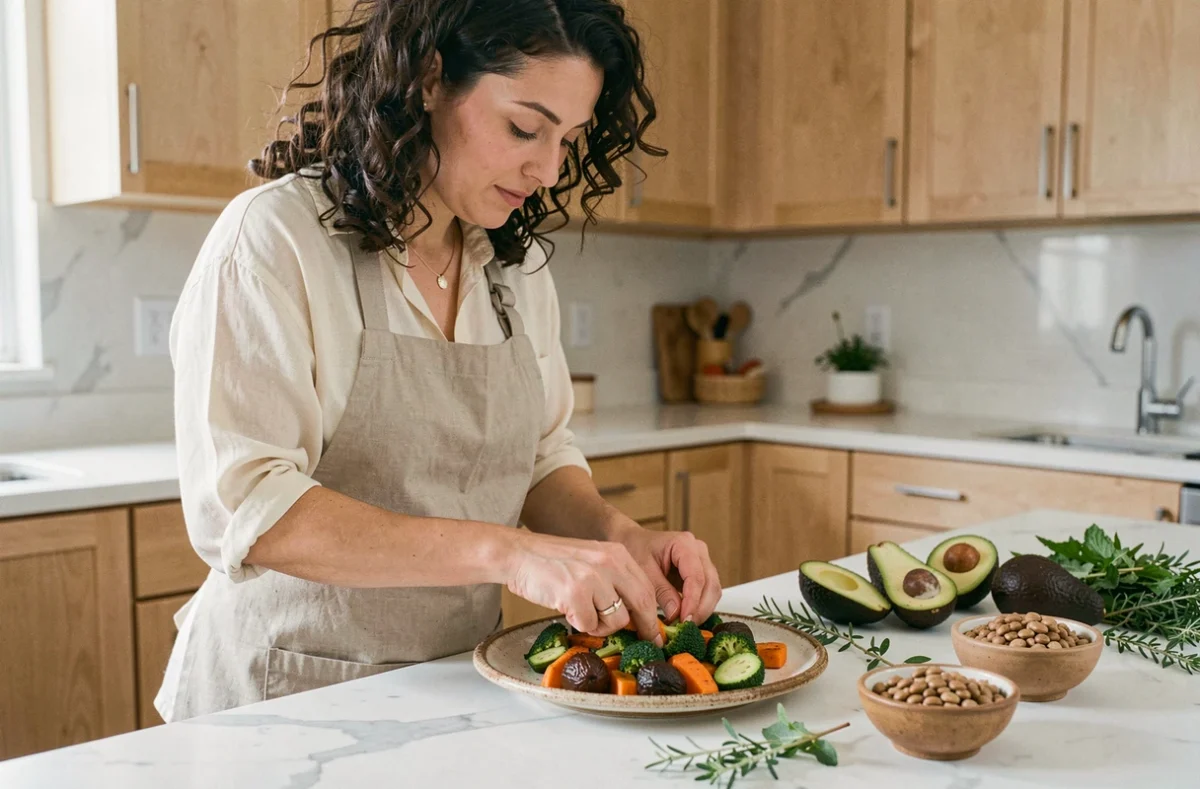
How to build a plant-based meal that is as filling as a classic meat dish? Plant-based cooking is not just about removing animal protein from a plate. Recent French nutritional recommendations, particularly those from Anses, emphasize the combination of vegetables, a source of plant-based protein, and a starch to achieve a complete meal. Comparing the composition of a standard meal with that of a balanced plant-based meal allows us to measure what changes concretely on the plate.
Classic meal vs. plant-based meal: comparative nutritional composition
The most common difficulty for beginners is producing meals that are not filling, often because animal protein is simply removed without compensation. The table below contrasts the typical structure of an omnivorous meal with that of a well-constructed plant-based meal.
| Component | Classic omnivorous meal | Balanced plant-based meal |
|---|---|---|
| Proteins | Meat, fish, or eggs | Legumes (lentils, chickpeas, dried beans) |
| Starches | White rice, pasta, potatoes | Whole grains (brown rice, quinoa, bulgur) |
| Vegetables | Side portion | At least half the plate |
| Fats | Butter, cream | Oils rich in omega-3 (rapeseed, walnuts, flaxseed) |
| Iron absorption | Heme iron (well absorbed) | Non-heme iron + vitamin C to improve absorption |
The line about iron deserves special attention. Plant-based iron is significantly less well absorbed than animal-derived iron. Anses, in its nutritional references published in February 2025, emphasizes the importance of combining sources of plant-based iron with foods rich in vitamin C (raw bell pepper, citrus fruits, parsley) to compensate for this gap.
Consulting plant-based recipes on Cuisine Gratuite helps visualize these combinations in concrete dishes designed for everyday meals.
Legumes and whole grains: the duo that Anses recommends several times a week
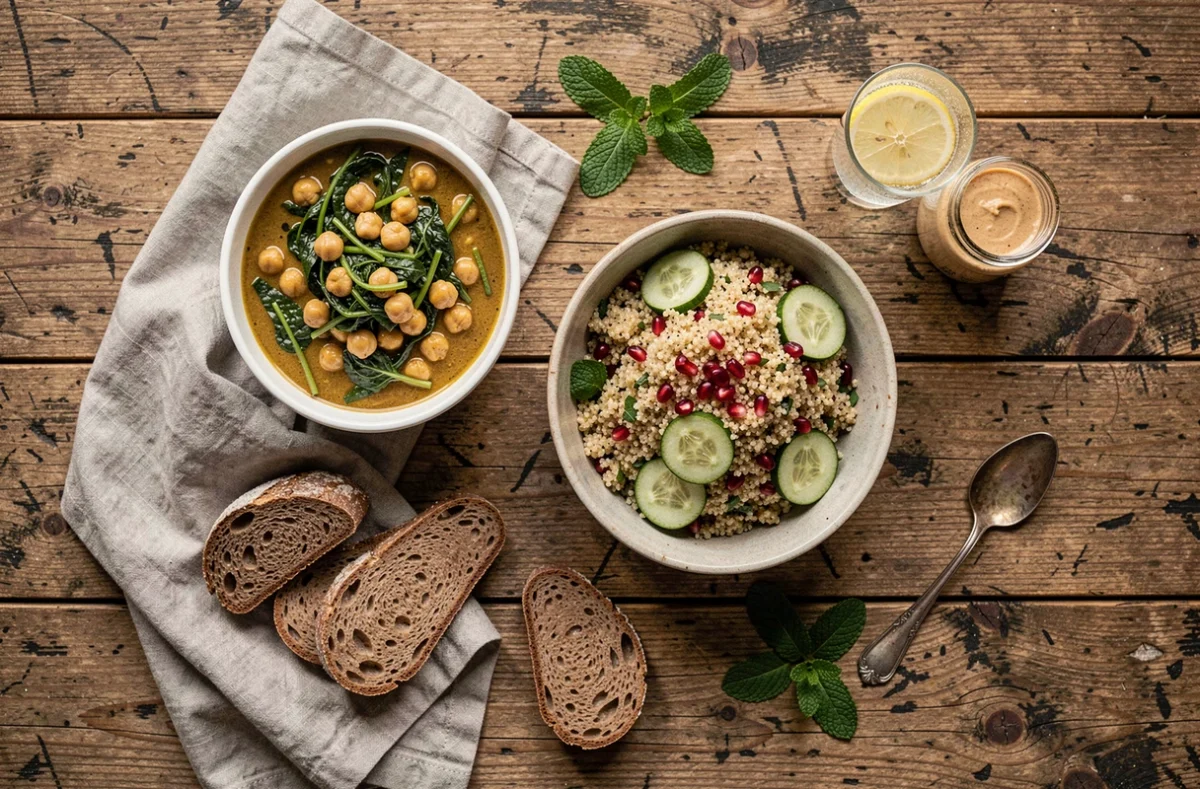
Anses positions legumes as a cornerstone of the diet, even for those who do not completely eliminate meat. Lentils, chickpeas, and dried beans several times a week provide a sufficient protein base when combined with whole grains. This complementarity between the amino acids of legumes and those of grains is a known mechanism, but rarely translated into concrete actions for beginners.
In practice, a bowl of brown rice and coral lentils cooked with spices and a drizzle of rapeseed oil ticks all the boxes. Cooking legumes remains the main barrier: coral lentils cook in about ten minutes, making them the ideal entry ingredient.
Whole grains also provide fiber and micronutrients that refined versions no longer contain. Replacing white pasta with semi-whole pasta represents a minimal change in taste but is significant nutritionally.
Soy in plant-based cooking: an ingredient to use wisely
Soy is often presented as the universal plant protein. Anses’ recommendations, relayed by Version Femina in September 2026, nuance this view. Soy deserves specific treatment rather than systematic consumption.
Diversifying sources of plant-based proteins remains the best strategy. Alternating between tofu, tempeh, various legumes (split peas, fava beans, red beans), and nuts avoids concentrating one’s diet on a single food. This diversification also responds to another recommendation from Anses: vary supply chains to limit repeated exposure to certain contaminants.
For a beginner, this translates into a simple rule: do not include tofu in every meal, even if it is the easiest plant ingredient to cook.
Three easy plant-based recipes to structure a typical week
Rather than a long list, three dishes are enough to cover the basics of a week of beginner plant-based cooking. Each illustrates a different nutritional principle.
- Coral lentil dahl with coconut milk and turmeric, served with brown rice: legumes-grains combination, quick cooking, deep flavors thanks to spices (cumin, turmeric, coriander)
- Salad of roasted chickpeas, bulgur, raw bell pepper, and lemon juice: bell pepper and lemon provide vitamin C that promotes iron absorption from chickpeas
- Semi-whole pasta with broccoli, crushed walnuts, and walnut oil: omega-3 intake from the oil and walnuts, green vegetable rich in iron and vitamin C simultaneously
These three meals cover the main pillars: legumes, whole grains, omega-3-rich oils, and the iron-vitamin C combination. Each dish can be prepared in under thirty minutes with ingredients available at the supermarket.
Common mistakes in beginner plant-based eating
The first mistake is compensating for the absence of meat with ultra-processed plant products (industrial soy steaks, meat substitutes). These products often contain long ingredient lists and high levels of salt or additives.
The second concerns monotony. Eating the same vegetables and the same grain every day creates an imbalance. Anses’ guidelines recommend varying foods, not just categories.
- Alternating green lentils, coral lentils, chickpeas, red beans, and split peas from week to week
- Changing oils according to dishes: rapeseed for dressings, olive for cooking, walnut for salads
- Incorporating different seasonal vegetables each week rather than limiting to three or four favorites
Variety protects better than a perfect but repetitive plant-based diet. This is a point that beginner recipe lists often overlook.
A well-conducted plant-based diet relies on precise combinations, not on the elimination of a food group. Anses’ data confirms that legumes, whole grains, and omega-3-rich oils form a solid nutritional foundation. The rest is a matter of practice and curiosity for flavors.