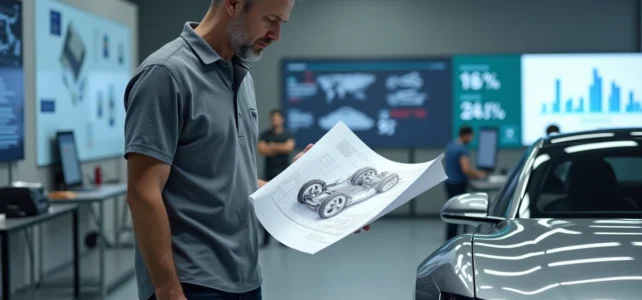
In Europe, half of the new models launched in 2023 already incorporate hybrid or electric technology. Yet, average CO₂ emissions from passenger vehicles continue to fluctuate each year, hindered by the rise of SUVs and growing demand in certain emerging markets.
Manufacturers are juggling increasingly strict environmental regulations while having to adapt to weakened supply chains. Investments in research, industrial transformation, and new mobility solutions are becoming essential levers to maintain the balance of the sector.
Where does the automotive industry really stand today?
The automotive sector is making significant strides in a rapidly changing landscape. After the shock caused by the pandemic, the recovery remains fragile and uneven in Europe. The French automotive market is struggling to regain its pre-crisis momentum, while China leads global sales, especially in the realm of electric vehicles. In light of this dynamic, the European automotive industry must confront the rise of imports, particularly from Asia, which disrupt established balances.
For European automakers, the reality is harsh: the electric transition is accelerating, pressure on prices is intensifying, and market shares are eroding. Behind the scenes, the European Commission is dissecting the issue of tariffs on imported electric vehicles. Discussions are tense around market opening versus the need to defend local industry.
On the French front, the automotive sector is navigating between declining sales of thermal vehicles and the rapid expansion of electric vehicles. Added value is shifting towards digital, batteries, and software. For those looking to delve deeper, visiting the Claravox site provides an in-depth reading on the new perspectives of the sector, its upheavals, and strategies at both European and global levels.
Energy transition, innovations, and new uses: the sector tested by transformations
The shift towards energy transition is imperative for the automotive sector. The rise of electric and hybrid vehicles is accompanied by increasingly demanding European regulations on emissions. Public subsidies, ecological bonuses, eco-scores are reshaping industrial strategies and intensifying competition. This upheaval goes beyond the abandonment of thermal engines: mastering battery production is a significant challenge for both industrial independence and supply security. Gigafactories are emerging across the Old Continent, a testament to this renewed ambition.
At the same time, innovation is embodied in the development of embedded software, cybersecurity, and new uses. Today’s vehicles are transforming into true digital hubs: intelligent energy management, semi-autonomous driving, enhanced connectivity. Shared mobility is asserting itself, the circular economy is gaining ground, and the relationship with individual cars is evolving. Anticipating a slowdown in new car sales, manufacturers are investing in recycling, material reuse, and laying the groundwork for a battery recycling industry.
The price of energy and access to strategic resources like lithium, cobalt, and nickel weigh heavily on competitiveness. Tensions in these markets necessitate a reevaluation of supply chains and the invention of new forms of raw material management. Amid regulatory constraints, industrial challenges, and societal expectations, the automotive sector continues its transformation, without a safety net.
What challenges lie ahead and what avenues to rethink mobility?
The automotive sector is facing major upheavals. The energy crisis has exposed the sector’s fragility in the face of soaring electricity prices and pressure on raw materials. This dependence reshuffles the cards of competitiveness in Europe, forcing serious reflection on the relocation of certain production chains and the integration of stronger local content in vehicle design.
On the social front, preserving industrial jobs is at the forefront of concerns. Unions are warning about the disappearance or transformation of many jobs, a direct consequence of the rise of electric vehicles. Mobilization is taking shape around safeguarding skills and adapting training. Some in decision-making circles are revisiting the idea of partial nationalization to preserve industrial sovereignty.
For professional fleets, the transition to electric requires anticipating additional costs related to energy and charging infrastructure. Discussions on tariffs and the regulation of imports, particularly regarding high-value vehicles, are lively in the corridors of Brussels.
Several action points are emerging to address these challenges:
- Strengthen the local anchoring of subcontractors to limit loss of competitiveness
- Implement concrete measures to support job retraining
- Stabilize the price of electricity to ensure the viability of European industrial sites in the medium term
Rethinking mobility today means combining multiple uses and transformation demands. Amid industrial imperatives, territorial expectations, and new user behaviors, the automotive sector is crafting a future under tension, yet full of possibilities. Who, tomorrow, will still dare to bet on the stagnant car when the entire ecosystem seems ready to write a new chapter?