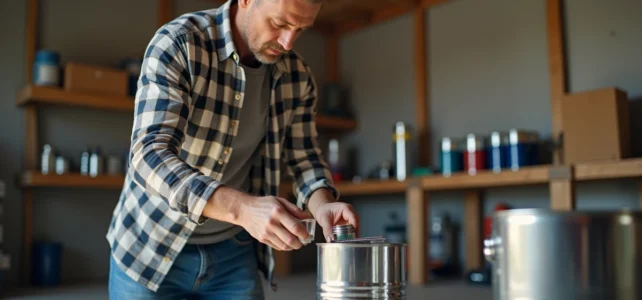
Exceeding by a few milliliters or underdosing when diluting paint is not a trivial detail: the texture, coverage, and final appearance will be instantly affected. A deviation, even minimal, can be enough to turn a smooth application into an unfortunate experimental ground, where marks and defects appear unexpectedly.
Everything hinges on the precision of the gesture, the selection of the appropriate tool, and the sharp attention paid to the type of paint and the surface. Some manufacturers tolerate deviations from the norm, but relying on that exposes one to surprises, even with the best paints on the market.
Why aim for a 5% dilution: understanding the interest for beginners
When starting out in the art of applying paint, aiming for a 5% dilution is not superfluous. This precise threshold makes the work easier, reduces the risk of error, and allows for a homogeneous paste across the entire surface. It is not uncommon for beginners to struggle to find the right balance: too thick, the paint clings and marks; too fluid, it runs and reveals the substrate underneath.
Opting for a 5% dilution also bets on the depth and brightness of the shades. This makes the application smoother, whether working with wood, plaster, or a still-raw wall. This technique quickly becomes an asset to fully exploit the benefits of acrylic or oil-based paints. This results in even layers, fewer marks, and gestures that gain confidence, especially with a brush or roller.
To better understand how to dilute paint to 5 percent, some resources detail the step-by-step process, such as the page ‘Dilution of Paint at 5%: Effective Methods and Techniques – Chic Intemporel’. This precise dosage quickly becomes the foundation of any progress: it structures the learning of painting techniques, opens the door to rich finishes and vibrant colors, without the fear of wasting an entire pot. With good brushes, those suited to the material, controlled dilution brings out every vivid color and ensures a clean application, without unpleasant surprises.
What tools and calculations to succeed in dilution without mistakes?
To achieve a 5% dilution without a hitch, the choice of materials matters more than it seems. Equip yourself with a graduated container, a kitchen scale, or a precise measuring cup. The calculation leaves no room for approximation: for 1 liter of acrylic paint or oil-based paint, pour exactly 50 milliliters of water or thinner, depending on the base. This simple ratio protects against the trap of random mixtures, which may or may not guarantee a uniform result.
Dilution Table for 5%
| Volume of paint | Volume of water or thinner (5%) |
|---|---|
| 1 L | 50 ml |
| 500 ml | 25 ml |
| 250 ml | 12.5 ml |
Respecting this dosage ensures even paint layers. Painting techniques recommend mixing carefully with a spatula or a clean stick to guarantee a homogeneous paste. If you are working with oil paint, replace water with turpentine while maintaining the same proportion. Choosing the right brush for the material allows for application without overload or drips, whether painting wood or canvas.
The rigor of calculation, attention to each tool, and knowledge of the specifics of each paint tube lay the groundwork for safe practice. This discipline gives the freedom to tackle all projects, from meticulous details to large surfaces, with the confidence of a faithful result and perfectly balanced texture.
Practical tips and tricks for perfectly diluted paint every time
The success of a painting project lies in the details. Before starting, prepare your workspace: a ventilated room protects both air quality and your health, especially with oil paints. Choose clean containers that match the quantity to be diluted. Between uses, thoroughly clean your brushes: this prevents deposits that can ruin the consistency of the layers.
To optimize your results, here are some reflexes to adopt:
- Adjust the dilution according to the substrate: on a porous wall, reduce the amount of liquid slightly; on a smooth surface, strictly adhere to the dosage.
- Clean your tools after each use. Clean brushes prolong their lifespan and maintain the intensity of the shades.
- Allow each layer of paint to dry before proceeding. This avoids unwanted marks and prevents excess thickness.
Another point not to overlook: the ecological impact. Opt for water when diluting acrylic paints and limit the use of solvents, keeping the environment in mind. Whether you are in Paris or elsewhere, these simple gestures form the key to successful work, on canvas as well as on walls.
Mastering the 5% dilution is to enjoy the luxury of a faithful color, an ideal texture, and a smooth application. Once this step is mastered, paint no longer merely covers: it reveals, nuances, and enhances each surface, at your own pace, project after project.