
A wedding relies on a chain of interdependent decisions: the date determines the venue, the venue determines the caterer, and the budget mediates everything. Organizing a wedding is therefore akin to managing a project where each choice upstream redistributes the options downstream. Understanding this mechanism helps avoid blockages and maintain real flexibility in the preparations.
Carbon footprint and logistics of the reception venue
The choice of venue is often treated as an aesthetic question. It is primarily a logistical decision. According to Mariage Pratique, transportation accounts for 80% of a wedding’s carbon footprint. Consolidating the town hall, ceremony, and reception at the same site or within a limited perimeter reduces emissions, as well as shuttle costs and time lost between stages.
A venue far from the town hall requires planning for transportation for all guests, which increases the transport budget without couples always anticipating it. Opting for a venue or reception hall close to the celebration municipality simplifies the day for everyone.
The venue question also involves capacity, accessibility for people with reduced mobility, closing times imposed by neighbors, and the possibility of on-site accommodation. Several directories allow filtering these criteria: on espace-mariage.fr, provider listings detail the location and available facilities, making comparison easier before any travel.
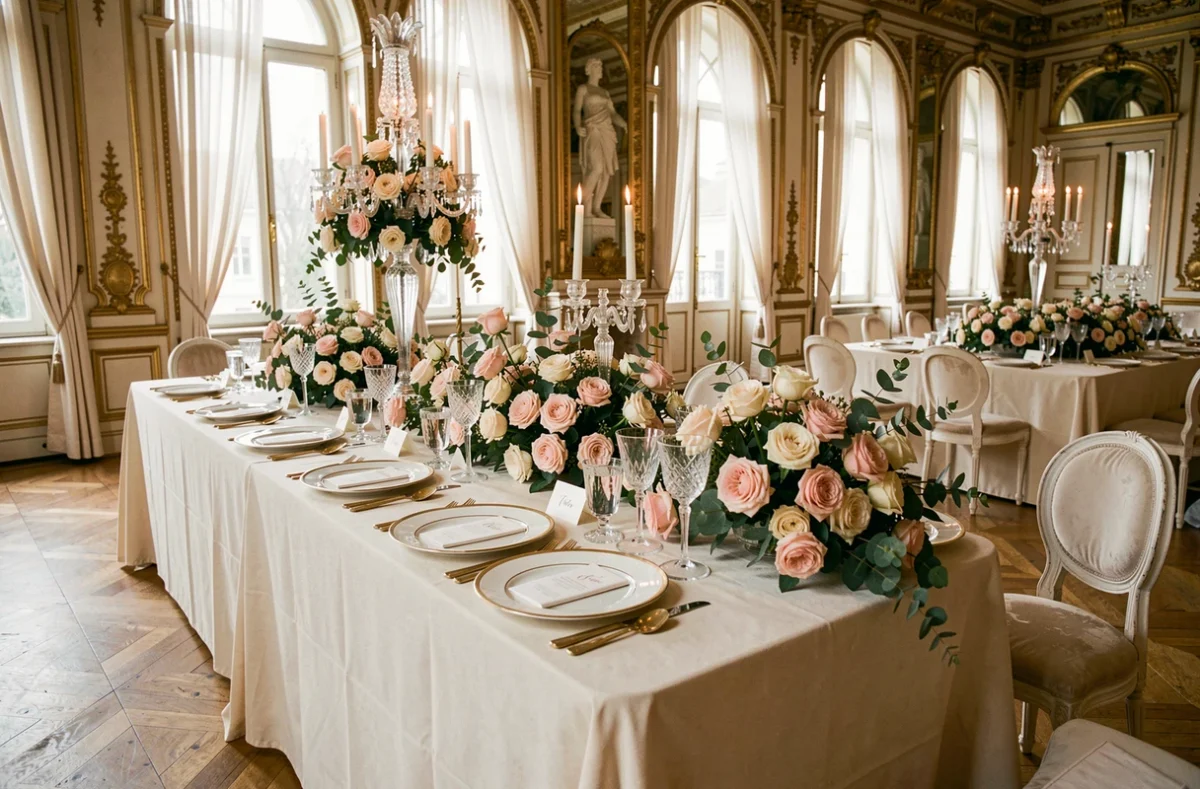
Administrative calendar for civil marriage in France
Civil marriage imposes a non-negotiable calendar. The marriage file must be submitted complete to the town hall, and the ceremony cannot take place before the tenth day following the publication of the banns. This legal delay, confirmed by Service-Public.fr (updated September 2026), can push back the planned date if the file is submitted late.
The required documents vary depending on the situation of the future spouses (nationality, previous marriage, legal protection regime). In some highly sought-after municipalities, Saturday ceremony slots are booked several months in advance. It is therefore wise to contact the town hall before signing the reception venue contract.
Order of priority to avoid date conflicts
- Check the availability of the town hall and place of worship (if religious ceremony) before blocking the reception venue.
- Confirm the delay for the publication of the banns with the relevant municipality, as some town halls add an additional delay during the summer period.
- Book the caterer and photographer as soon as the date is locked in: these two providers are the ones whose schedules fill up the fastest.
Wedding budget: items that couples underestimate
The list of budget items for a wedding is long: venue, caterer, decoration, outfits, photographer, music, invitations, flowers, transport, accommodation. Overruns rarely come from the main items, but from accumulated ancillary costs that no one had budgeted for.
Drinks outside the caterer’s package, sound equipment for the venue when not included, cleaning fees after the reception, tips for service staff, or alterations to the dress are all lines missing from the initial global quote.
Traceability of providers and eco-responsible arbitration
Recent recommendations for eco-responsible weddings go beyond reusable decoration. According to MaJolieMessagerie.fr, couples are now encouraged to ask each provider about the origin of materials, recycling conditions, management of equipment after the event, and travel practices.
Request a detailed quote that specifies the origin of products (French or imported flowers, disposable or rented dishes, synthetic or linen tablecloths) allows for comparison not only of prices but also of environmental consistency. This level of detail in the quote is also a good indicator of the provider’s seriousness.

Selection of wedding providers: concrete comparison criteria
Comparing wedding providers is not just about aligning prices. A caterer with an attractive price who charges extra for service staff can sometimes end up costing more than a competitor whose quote includes everything. The exact scope of each service must be clearly stated in the contract.
Before signing, several checks are necessary:
- Ask if the quote includes travel expenses, setup and takedown of equipment, and guaranteed service duration.
- Check for the existence of professional liability insurance, mandatory for caterers and highly recommended for photographers and DJs.
- Request a written payment schedule with cancellation conditions: some contracts stipulate the full retention of the deposit even in cases of force majeure.
- Consult recent and dated reviews, not just the testimonials highlighted on the provider’s website.
The booking period also matters. The most sought-after providers (photographers, caterers, florists) are booked between eight and twelve months before the wedding date for summer receptions. Delaying contact risks having to choose from the remaining availability rather than according to actual preferences.
Organizing a wedding is best treated as a sequence of documented decisions rather than an accumulation of inspirations. A detailed quote, a verified administrative calendar, and a venue chosen for its logistics as much as for its charm reduce the amount of improvisation on the day of the ceremony.