Wedding decor in 2022 was built around a simple idea: less artifice, more natural materials and colors. Minimalism, which had already been gaining ground since 2020, took a more confident turn. Couples favored neutral palettes, raw textures and less rigid floral arrangements. This approach also prompted them to think about the lifespan of every decorative element, from table centerpieces to cut flowers.
Raw materials and reclaimed furniture: the foundation of 2022 wedding decor
Have you noticed that the most photographed reception tables are almost never covered with a tablecloth? In 2022, raw wood, crumpled linen and stoneware became the materials of choice. The idea isn’t to make everything “rustic” by default, but to let the furniture’s natural materials set the mood.
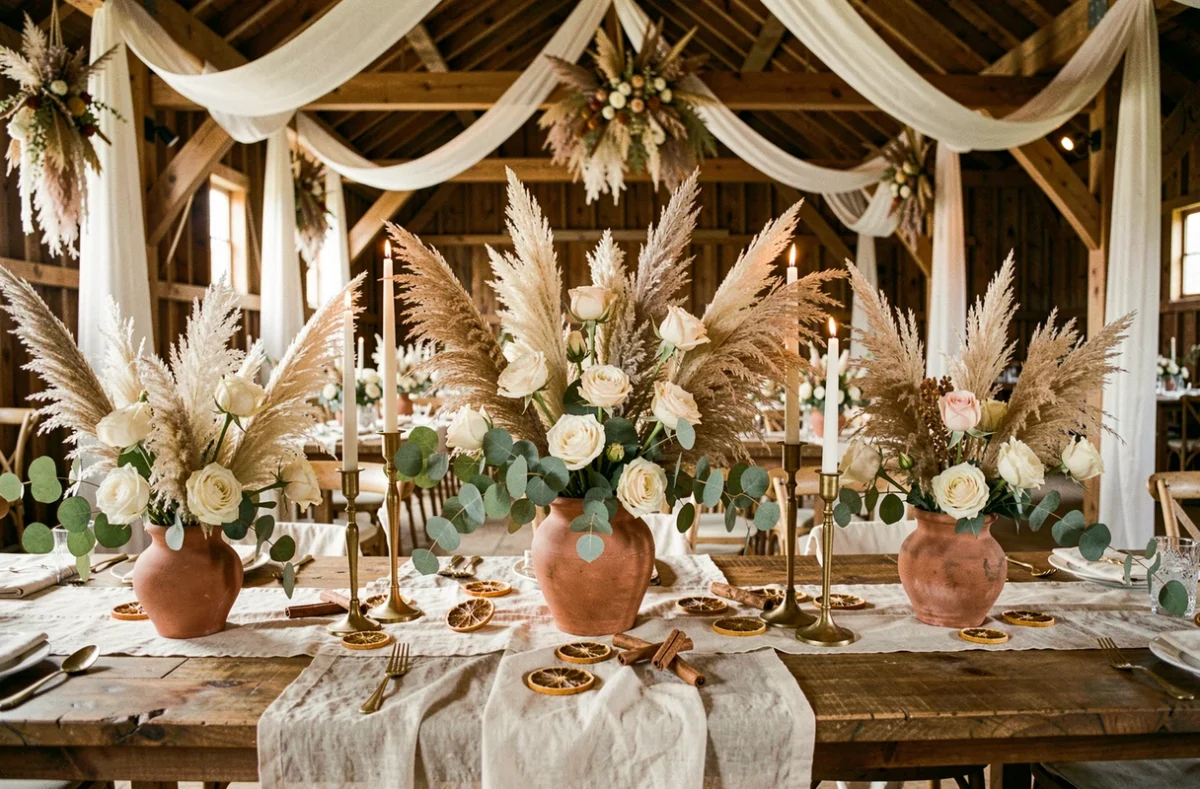
Solid wood, in particular, replaced white-clothed round tables at most country-style receptions and even at urban weddings. Aged oak or recycled pine tabletops provide a warm visual foundation that takes only a few decorative touches to create a cohesive look.
Renting vintage or refurbished furniture became second nature. Couples who choose mismatched wooden chairs or metal chairs with a weathered finish are making an aesthetic choice as well as a practical one: these pieces can be rented, returned and kept out of landfill. For more on this topic, Wedding News’ 2022 wedding decor trends explores several combinations of materials and styles that work well together.
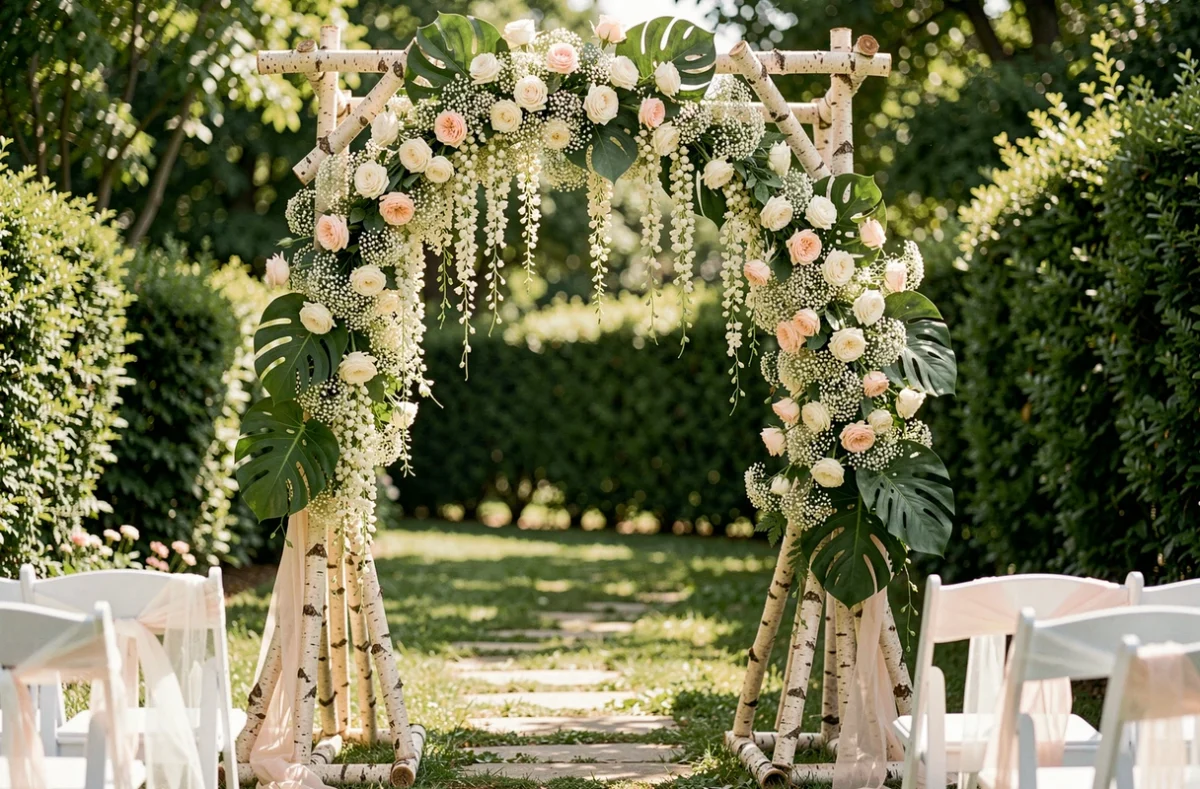
Terracotta and neutral color palettes for a natural wedding
The signature color of the year wasn’t found in a traditional color chart. Terracotta paired with nude, sand and ivory tones dominated wedding inspiration. This choice was no coincidence: these shades work just as well outdoors as they do indoors, in natural light or beneath string lights.
Why the shift toward such soft colors? Because they’re so forgiving. A terracotta stoneware centerpiece on a light wood table works effortlessly. Add sand-colored linen napkins and a few candles, and the result is harmonious without needing a decorator.
Pairing rose gold without going over the top
Rose gold remained popular in 2022, but as a subtle accent: a candlestick, cutlery or a slim metal arch. Rose gold works as an accent, not as a base. Against natural wood, it adds a touch of brightness without overpowering the neutral palette.
A common mistake is to use too many gold or rose-gold details. One type of rose-gold item per table is enough to create the desired effect.
Dried flowers and long-lasting botanical arrangements
Dried flowers made a clear mark on wedding decor trends. Pampas grass, preserved eucalyptus, thistles and strawflowers offer an advantage fresh flowers can’t match: they can be prepared weeks in advance and won’t wilt on the big day.
This approach also makes logistics easier. A dried-flower bouquet can be transported without water, stored without refrigeration and reused after the ceremony as home decor.
Local fresh flowers: an increasingly popular alternative
Some couples prefer fresh flowers, provided they’re in season and locally grown. Wedding planners now offer potted arrangements or bouquets for guests to take home at the end of the evening, helping to avoid waste. Donating flowers that haven’t been preserved to retirement homes or charities has also become more common.
- Dried flowers last for several months, making it possible to try out the decor at home before the wedding.
- Potted plants (succulents, herbs) can double as place cards and go home with guests.
- Mixed arrangements combining local fresh flowers with dried elements add volume without relying on just one type of plant.
Reusable tableware and waste management at the reception
Wedding decor doesn’t stop at the centerpieces. In 2022, tableware and waste management began to feature in conversations between couples and caterers. The AGEC law, which requires reusable tableware for on-site consumption, established a framework that event professionals are gradually incorporating into their services.
Renting ceramic or glass tableware instead of buying disposable items is no longer just an eco-friendly gesture. It’s also an aesthetic choice: a beige stoneware plate or a hand-blown glass flute plays a full part in the table decor.
Sorting food waste at source, which has been mandatory since January 2024, also applies to caterers working at weddings. Planning for discreet but accessible sorting bins is now part of the decor logistics. Some reception venues include this equipment in their packages.
- Choose tableware that matches the theme (stoneware, porcelain, tinted glass) to create a cohesive table setting.
- Plan food-waste sorting with the caterer from the outset.
- Replace disposable candy-bar containers with returnable glass jars or reusable bowls.
Minimalist personalization: the details that make a difference on the tables
DIY is still popular, but with a more restrained approach. Rather than making every decorative element themselves, couples in 2022 focused their efforts on one or two personalized details with strong visual impact.
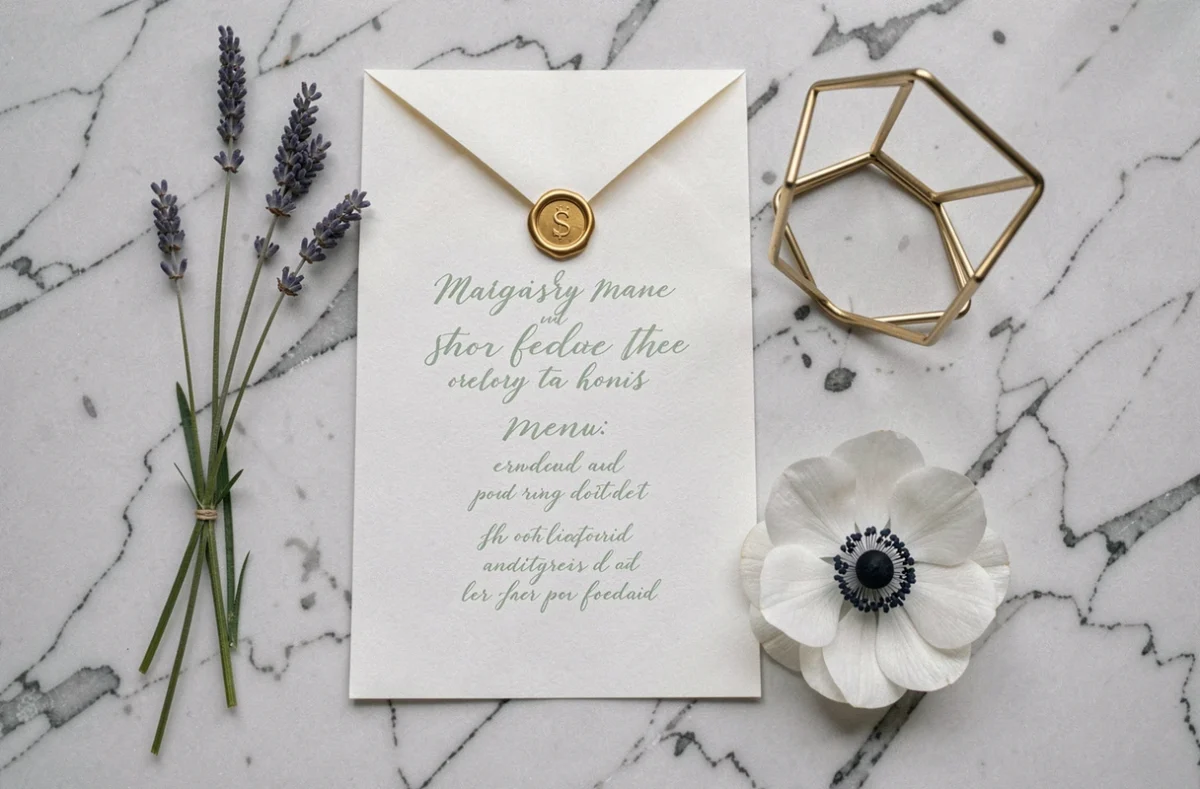
A calligraphed menu on kraft paper, a seating chart engraved on a wooden board, or handmade clay place cards. These details are enough to give a wedding its own identity without turning the weeks beforehand into a nonstop craft workshop.
Decorative minimalism is based on a principle wedding professionals often repeat: three carefully chosen elements make more of an impression than fifteen scattered accessories. A candle, a sprig of eucalyptus and a linen napkin ring create a cohesive table setting. Add a table runner, confetti, plastic name holders and glitter, and the effect you’re after gets lost.
Ultimately, the 2022 wedding decor trend laid the groundwork for an approach that remains relevant years later: natural materials, a limited palette and deliberate choices instead of an accumulation of decorative elements. What makes a wedding visually successful isn’t the decor budget, but the harmony between the venue, materials and colors.