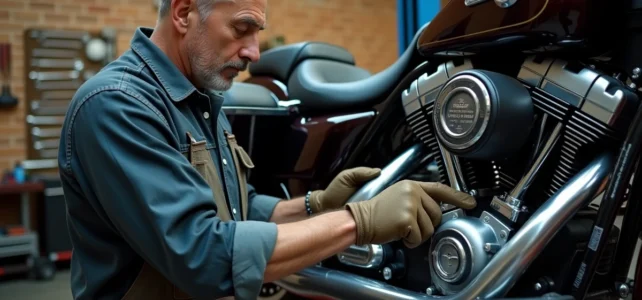
A Harley Davidson engine that knocks when cold, an unusual vibration when hot, a lifter noise after a few tens of thousands of kilometers: these signals are concerning, but they don’t all tell the same story. Assessing the reliability of a Harley Davidson engine requires looking in the right place, which means going beyond the simple mileage displayed on the odometer.
Timing Tensioner and Hydraulic Lifters: The Real Indicators of Wear
Before discussing models or generations, it is essential to understand what fails first on a Harley V-twin. Two components account for the majority of mechanical problems reported by workshops: the timing chain tensioner and the hydraulic lifters.
The timing tensioner maintains the tension of the chain that synchronizes the crankshaft and camshaft. On Twin Cam models (produced from 1999), this tensioner uses a plastic pad that wears out over time. When it fails, the chain becomes loose, the timing shifts, and the damage can lead to engine failure.
The hydraulic lifters, on the other hand, ensure automatic play adjustment at the valves. On Milwaukee-Eight models, cases of premature wear have been reported on motorcycles used for heavy touring with high mileage. To address this, Harley-Davidson now recommends oils that meet API SN or later standards, specifically to protect these components.
Have you ever heard a regular metallic knocking at idle on a well-maintained Twin Cam? It’s often the tensioner that is starting to wear out. On a used model, asking for the replacement history of these two components provides a much more reliable idea of the actual engine condition than mileage alone. A comprehensive file on the reliability of Harley Davidson engines details the differences between generations on this specific point.
Twin Cam vs. Milwaukee-Eight: Which Harley Engine Generation to Prefer
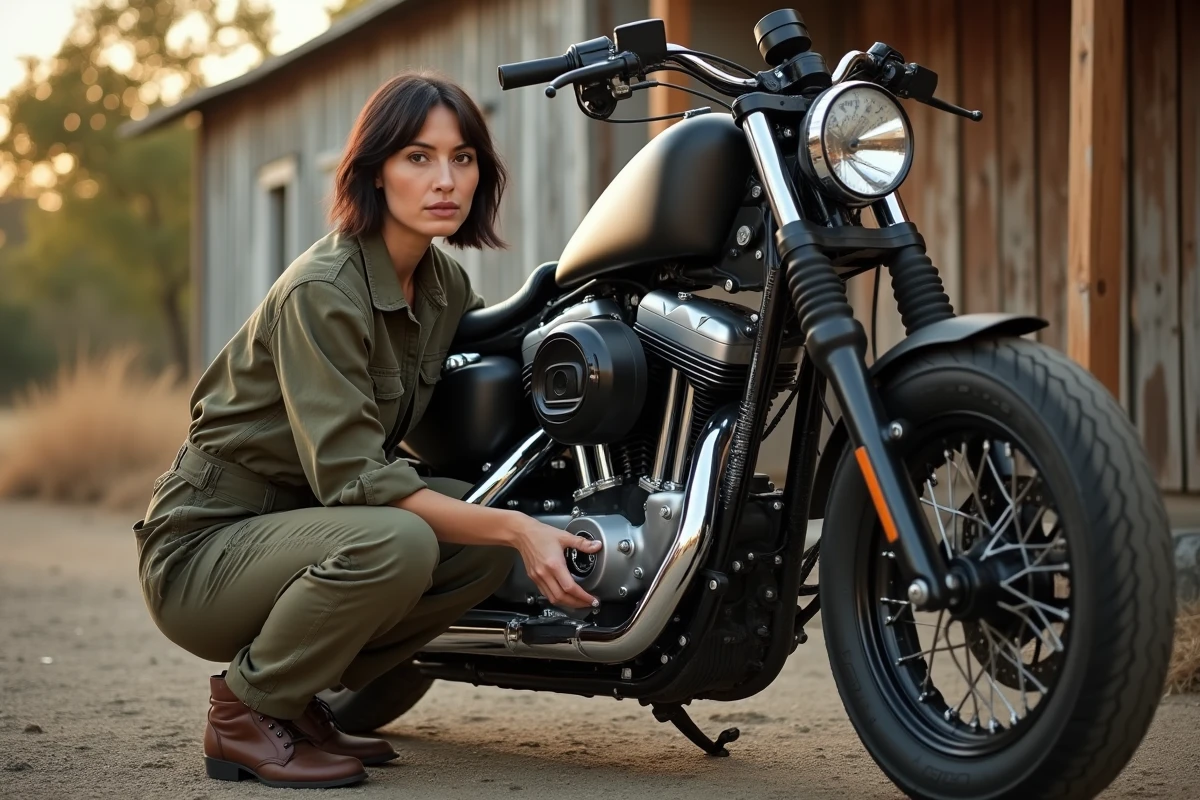
The Twin Cam equipped the Softail, Dyna, and Touring from 1999 until its gradual replacement by the Milwaukee-Eight starting in 2017. Two decades of production, several versions (Twin Cam 88, 96, 103, 110), and a massive feedback.
The Twin Cam 96 and 103 are the most common on the used market. Their overall reliability is acceptable, provided that the timing tensioner has been replaced or monitored. Several networks of European dealers have even received partial coverage from Harley-Davidson for this recurring issue, even out of warranty, as long as the service book is complete.
The Milwaukee-Eight (M8), however, marks a significant architectural change. Four valves per cylinder instead of two, liquid cooling on some versions (notably the Touring models), and a rethought distribution system. Recent warranty claim data shows a marked decrease in internal failures compared to the Twin Cam at equivalent mileage.
In summary, if you’re looking for a proven engine that is cheaper to purchase, a Twin Cam 103 with a rigorous maintenance history remains a solid choice. If you aim for long-term mechanical peace of mind, the Milwaukee-Eight has the advantage.
Harley Davidson Engine Maintenance: What Really Changes Lifespan
The reliability of a Harley engine does not solely depend on its design. Adhering to the manufacturer’s maintenance schedule is as important as the engine generation. Three points deserve special attention.
- The choice of engine oil: on a Milwaukee-Eight, oil that meets API SN (or higher) standards protects the hydraulic lifters and cams. Using an unsuitable generic oil accelerates wear on these parts, especially in touring use with a passenger and luggage.
- The primary transmission oil change: often neglected, it lubricates the clutch and primary chain. Degraded fluid causes clutch jerks and accelerates disc wear.
- The inspection of the cooling system (on liquid-cooled versions): Milwaukee-Eight Touring models use a mixed air-liquid cooling system. An insufficient fluid level or a faulty thermostat can lead to localized overheating of the cylinder heads, which is invisible until you check the gauge.
A owner who follows the maintenance book and uses the fluids recommended by Harley-Davidson is in the best position to far exceed the mileage thresholds where problems typically arise.
Buying a Used Harley Davidson: Mechanical Checks Not to Skip
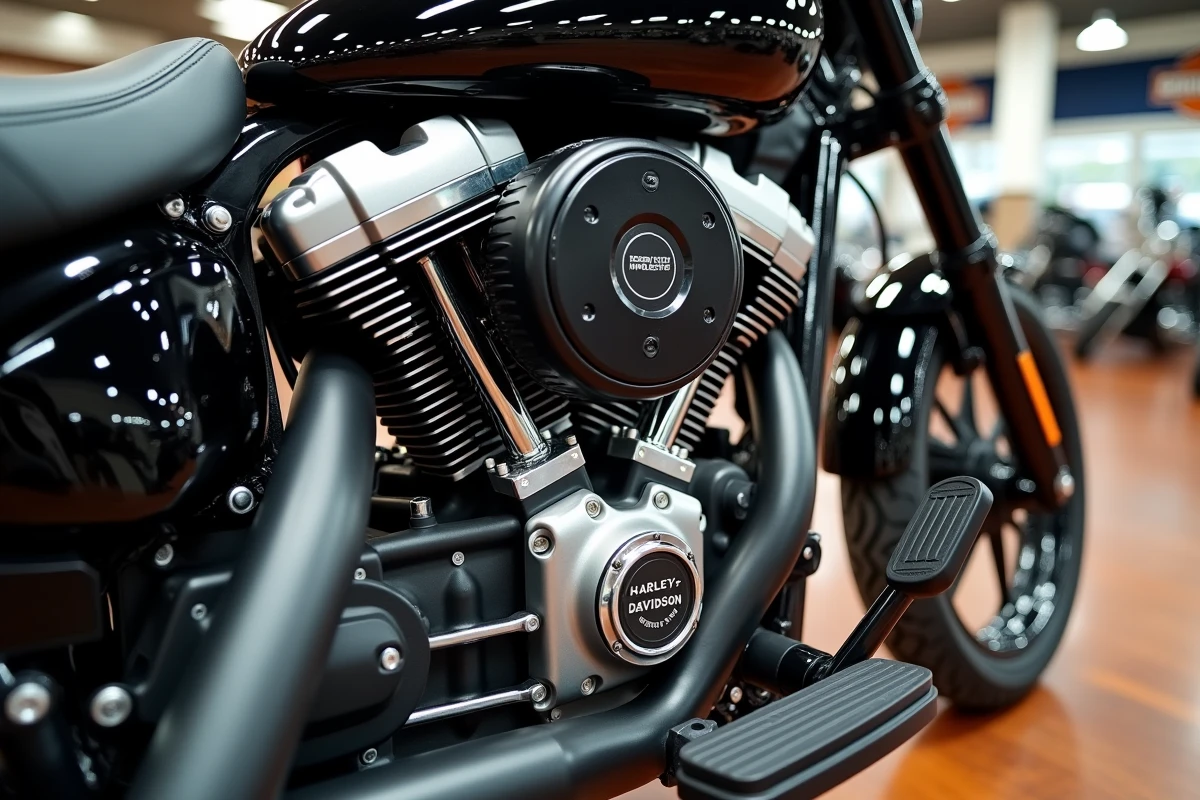
In the used market, the motorcycle may have changed hands several times. A complete maintenance history is the most valuable document, more so than mileage or year.
What to Check First
Ask for the invoices for the replacement of the timing tensioner on a Twin Cam. If the seller cannot provide them, assume that the tensioner is original and potentially at the end of its life.
Listen to the engine when cold for at least two minutes. A knocking that disappears when hot may indicate a tired lifter. A noise that persists when hot indicates a more advanced problem.
Check the color of the engine oil on the dipstick. Opaque black oil on a motorcycle that is supposed to have been recently changed reveals either a lie or an internal combustion problem.
Particular Attention to Softail and Touring Models
Softail models equipped with the Twin Cam B (with a balance shaft integrated into the crankcase) deserve specific attention. The balance shaft bearing can wear out and generate abnormal vibrations. On high-mileage Touring models, check the condition of the cooling system and the proper functioning of the radiator fan.
A well-maintained Harley Davidson engine can last for years without major issues. The difference between a reliable engine and a problematic one rarely lies in the original design. It almost always comes down to the rigor of maintenance, the choice of fluids, and the transparency of the previous owner regarding the mechanical history.